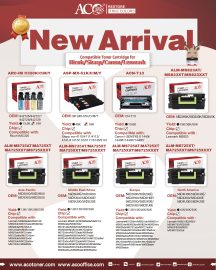
🔥 New Arrival | Built for Global Market Demand

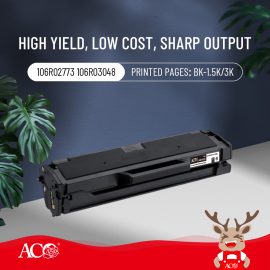
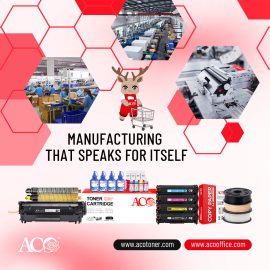
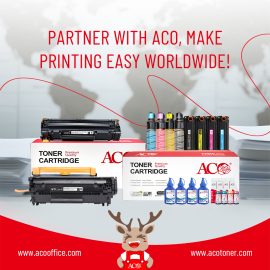
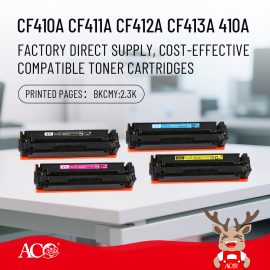
Expanding your toner catalog? ACO brings you a comprehensive compatible toner solution lineup engineered for multi-brand performance. ✔ Compatible with Ricoh, Sharp, Canon & Lexmark Whether you're serving local distributors or cross-border markets, ACO helps you deliver consistent quality with scalable supply capability. 📊 More models. More opportunities. More growth. 🌐 www.acotoner.com

Why do some printed pages show black lines or spots?

During routine printing operations, the appearance of black lines or spots on pages is a relatively common issue, typically related to the condition of the toner cartridge or specific printing components. 1. Damaged or Aged Photosensitive Drum If the surface of the photosensitive drum sustains scratches or wear, it will result in recurring black lines or spots appearing on the printed pages. 2. Uneven Toner Distribution or Impurities Inconsistent toner quality or the presence of impurities mixed into the toner can lead to the appearance of black spots or smudges during printing. 3. Faulty Cleaning Blade or Magnetic Roller A worn cleaning blade or an uneven magnetic roller surface can […]

What are the different paper requirements for different printing technologies?

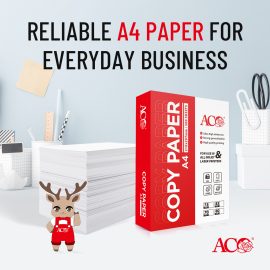
Different printing technologies impose distinct requirements on paper; selecting the appropriate paper can significantly enhance print quality and help protect the printing equipment. 1. Laser Printing Laser printing relies on high-temperature fusing to bond toner to the page; consequently, it places high demands on the paper's heat resistance. Generally, standard copy paper or specialized laser paper is suitable; the paper surface must be smooth and resistant to deformation. 2. Inkjet Printing Inkjet printing requires paper with excellent ink absorption properties. Specialized inkjet paper or photo paper effectively prevents ink bleed, thereby enhancing color vibrancy and image clarity. 3. Dot Matrix Printing Primarily used for printing receipts and forms, this technology […]

Why is high-quality compatible food more and more popular?

With the development of printing technology and the increase of office needs, compatible printing consumables gradually become the choice of more and more enterprises and individual users. Compared with traditional original packaging consumables, high-quality compatible consumables show obvious advantages in terms of cost, performance and environmental protection. 1. More cost-effective High-quality compatible consumables guarantee a stable printing effect, while the price is usually significantly lower than the original product. For enterprises, schools and government organizations that need a large amount of printing, it can effectively reduce office costs. 2. Print performance can't be improved With the progress of manufacturing technology, high-quality compatible consumables have been greatly improved in terms of […]

What are some common misconceptions when purchasing compatible toner cartridges?

When purchasing compatible toner cartridges, many buyers often focus only on price or sample performance, neglecting some key factors. 1. Focusing solely on price while ignoring quality stability: While price is important, excessively low prices often indicate compromised materials or manufacturing processes. 2. Testing only samples without considering mass production capabilities: Some suppliers' samples perform well, but the same quality cannot be maintained in mass production. 3. Ignoring page yield and actual cost: Some toner cartridges are inexpensive, but low page yield or insufficient print density can lead to higher actual operating costs. 4. Neglecting after-sales and technical support: If the supplier lacks technical support or responds slowly when printing […]

How does toner particle size affect print sharpness?

In laser printing, toner particle size is a crucial factor determining print sharpness and image detail. Toner is not simply "black powder," but a functional material with precisely controlled particle size and distribution. 1. Finer particles result in finer images. Smaller, more uniform toner particles adhere more precisely to the photosensitive drum surface, creating finer text edges and smoother image transitions. This is especially critical for printing small text or high-resolution images. 2. Particle distribution affects uniformity. Not only average particle size, but also uniform particle distribution is equally important. Excessive particle size variation can lead to uneven development, increased background gray, or unstable black levels. 3. Overly fine particles […]

What Hidden Risks Are Easily Overlooked When Choosing a Toner Cartridge Supplier?

Many purchasing decisions when selecting a toner cartridge supplier are often based on price and sample performance. However, what truly impacts long-term cooperation are often some easily overlooked hidden risks. 1. Risk of Discrepancies Between Samples and Bulk Orders: Some suppliers meticulously select suppliers during the sample stage, but then change materials or simplify processes during mass production, leading to fluctuations in bulk quality and affecting customer reputation. 2. Unstable Raw Material Sources: Frequent changes in suppliers of core components such as toner and photoconductor drums can easily cause differences in print density, page yield, and stability. These problems are not easily detected in the short term. 3. Lack of […]

互換トナーカートリッジのサンプルテストでは、どのような重要指標を考慮すべきでしょうか?

互換トナーカートリッジの調達プロセスにおいて、サンプルテストは、その製品が大量生産と長期的な協力に値するかどうかを判断する重要なステップである。効果的なサンプルテストは、「印刷できるかどうか」だけでなく、次のようなコア指標にも焦点を当てる必要がある:1.印刷の鮮明さと濃度:文字のエッジが鮮明かどうか、画像が均一かどうか、ぼやけたり灰色がかった現象がないかどうかを観察する。安定した黒さは、トナーと現像システムのマッチングが良好であることを示す。2.ページ数性能:サンプルで印刷されたページ数が公称値に近いかどうかは、トナーカートリッジの[...]重要な指標です。

湿度が3Dプリント用フィラメントの性能に与える影響

3Dプリントプロセスにおいて、フィラメントの含水率はプリント品質を決定する重要な要素です。空気中の湿度が高すぎると、プラスチックフィラメントが水分を吸収し、プリント中に気泡や糸引き、表面の荒れなどの問題が生じ、モデルの精度や機械的強度に影響を及ぼします。1.吸湿材料の特性の違い フィラメントの種類によって吸湿特性が異なります。例えば、PLA、PETG、PA(ナイロン)は吸湿性の高い素材であり、数時間空気に触れるとかなりの水分を吸収する。ABS、HIPS、TPUは比較的吸湿性が低いが、長時間放置すると印刷の安定性に影響を及ぼす可能性がある。2.含水率が[...]に与える影響

再生トナーカートリッジ、互換トナーカートリッジ、およびオリジナルトナーカートリッジの違い

印刷消耗品市場において、トナーカートリッジは大きく分けて、純正トナーカートリッジ、互換トナーカートリッジ、再生トナーカートリッジの3つに分類される。それぞれの違いを理解することで、顧客はニーズに応じて最適な製品を選ぶことができる。1.オリジナルのトナーカートリッジ:オリジナルのプリンタブランド(HP、キヤノン、ブラザーなど)によって製造され、最も安定した互換性と印刷品質を提供します。利点:デメリット:初期投資が高い:デメリット:初期投資が高く、大規模なオフィス業務やチャネル販売には適さない。2.互換トナーカートリッジ:サードパーティの工場で新しく製造され、内部構造、ケーシング、感光ドラム、トナーの材質が新しく、複数のプリンターブランドと互換性がある。互換トナーの利点は[...]。

互換トナーカートリッジのページ収量はどのようにテスト・検証されていますか?

トナーカートリッジのページ収量は通常、STMC国際規格に従ってテストされる。テストでは、特定のサンプル印刷(ISO/IEC 19752など)を使用し、複数のプリンターを使用して標準的な温度と湿度の条件下で比較印刷を行います。トナー使用量と印刷ページ数が記録され、平均値が算出される。繰り返しテストと無作為抽出により、異なる環境下でのトナーカートリッジの安定性と一貫性を検証することができる。ページ数に影響を与える主な要因には、トナー濃度、感光ドラムの性能、印刷範囲、環境条件などがあります。ACOの互換トナーカートリッジは、STMCテストプロセスを厳密に遵守し、各[...]のページ収量を保証します。

互換トナーカートリッジのOEMプロジェクトでは、試作から量産までどのようなステップを踏むのですか?

For clients looking to establish their own brand, choosing a toner cartridge factory with OEM capabilities is crucial. A complete OEM project typically involves a systematic process from prototyping to mass production. 1. Requirements Communication and Solution Confirmation: Clients need to provide brand positioning, target market, and main printer models. The factory will determine the compatibility solution, toner type, packaging design, and product specifications based on these requirements. 2. Sample Development and Prototyping Testing: Samples are produced based on the confirmed technical parameters, and tests are conducted on printing effects, compatibility, and sealing. Once the samples are approved by the client, mass production preparation begins. 3. Material Procurement and Production […]

ウィーチャット
ウィーチャット
このページのトップへ