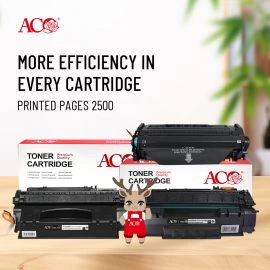
Is "page yield" based on laboratory data or real-world testing?

Page yield is typically derived from standardized testing rather than simple estimates. The page yield of a toner cartridge is generally measured according to international standards, such as ISO/IEC 19752 (for monochrome printing) or ISO/IEC 19798 (for color printing). These tests are conducted under strictly defined conditions—including specific printing environments, equipment, and standardized test pages—to […]

Why Is Toner Powder Particle Size So Important?

Toner is an essential material for laser printing, and its particle size is a critical factor influencing its performance. If particles are too large or unevenly distributed, it can compromise print clarity, the sharpness of text edges, and the overall quality of the output. For purchasers and distributors of office supplies, understanding toner particle size […]

Why Is Robust Shock-Proofing and Protection Essential for Toner Cartridge Packaging?

For overseas wholesalers, importers, and distributors in particular, high-quality packaging not only safeguards the product but also minimizes transit losses and post-sale complications. 1. Preventing Damage to Internal Components Toner cartridges contain sensitive parts, such as the photosensitive drum and cleaning blade. Severe vibrations or impacts during transit can damage these components, impairing the cartridge's […]

What Is Warping in 3D Printing and How Can You Prevent It?

Warping is a common problem in 3D printing, especially when using thermoplastic materials. It occurs when the edges of a printed part curl upward or the bottom gradually lifts away from the build plate. This can affect the appearance of the part and lead to dimensional inaccuracies, failed prints, and material waste. 1. Why Does […]

¿Por qué la impresora sigue indicando que hay que cambiar el cartucho de tóner después de haber instalado uno nuevo?

It is a common issue in office printing environments for a printer to continue displaying messages like "Replace toner," "Low toner," or "Toner cartridge not recognized" even after a new cartridge has been installed. Such issues do not necessarily indicate a quality defect in the toner cartridge itself; they can often be resolved by checking […]

¿Pueden variar los modelos de cartuchos de tóner dentro de una misma serie de impresoras que se comercializan en distintos países?

Yes, it is possible. Even if printers belong to the same brand and series, models sold in different countries or regions may use different toner cartridge models. Why does this happen? There are several main reasons: Regional model variations: Different markets may use different part numbers for consumables. Chip compatibility: The chips or recognition mechanisms […]

¿Un gramaje más alto implica necesariamente que el papel A4 sea de mejor calidad?

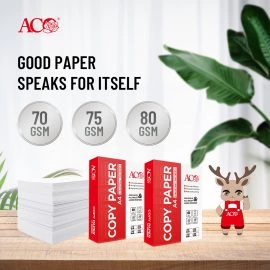
Not necessarily. GSM (Grams per Square Meter) indicates the paper's weight. For instance, ratings of 70gsm, 75gsm, and 80gsm mean the paper weighs 70g, 75g, and 80g per square meter, respectively. Generally, a higher GSM results in thicker, more rigid paper; however, weight alone does not directly determine quality. To evaluate A4 paper quality, consider […]

¿Cuál es la diferencia entre los cartuchos de tóner «compatibles», «reacondicionados» y «reconstruidos»?

When purchasing toner cartridges, you will often encounter the terms "Compatible," "Remanufactured," and "Rebuilt." What distinguishes them? The key difference lies in whether the product is newly manufactured or processed from a used cartridge. Compatible Toner Cartridge A brand-new, non-OEM cartridge produced by a third-party manufacturer, designed to be compatible with specific printers. These typically […]

¿Qué es la cobertura de páginas 5%? ¿Por qué determina el número de páginas que imprime tu cartucho de tóner?

La cobertura de página 5% significa que el tóner cubre 5% de una página, lo que equivale aproximadamente al consumo de una carta estándar que solo contenga texto. Esto es importante porque el rendimiento de los cartuchos se mide según este índice, en condiciones de laboratorio (ISO/IEC 19752), y no con tus documentos reales. Así pues, la verdadera cuestión es tu propia cobertura: Páginas reales ≈ Rendimiento nominal × (5% ÷ […]

¿El color desvaído de la impresión siempre indica un problema con el cartucho de tóner?

Cuando las impresiones se ven descoloridas o el texto parece difuminado, muchos usuarios dan por hecho inmediatamente que el problema está en el cartucho de tóner. Sin embargo, en realidad, una disminución de la calidad de impresión puede deberse a diversos factores y no tiene por qué estar causada necesariamente por el propio cartucho. 1. Niveles bajos de tóner. A medida que un cartucho de tóner se acerca al final de su vida útil […]